


On Wednesday, October 28, 2026, Mayor Zohran Mamdani announced that New York City will move forward with a long-delayed safety redesign of Third Avenue in Sunset Park, Brooklyn. The announcement comes two months after Jiayi Zheng, a 28-year-old nurse at NYU Langone Hospital–Brooklyn, was killed by a hit-and-run driver while crossing Third Avenue at 55th Street on her way home from a shift, according to amNY and Patch. As a Brooklyn pedestrian accident lawyer team, we at Chaikin Trial Group extend our deepest sympathy to Ms. Zheng’s family, colleagues and everyone in Sunset Park who has lost someone on this corridor.
What Happened on Third Avenue
According to the city’s Department of Transportation, 17 people have been killed in crashes along Third Avenue over the past decade, and more than half of them were pedestrians or cyclists (Patch). The intersection of 60th Street and Third Avenue alone recorded 72 injuries, five of them severe, and one death over the past five years (amNY).
Ms. Zheng’s death followed other tragedies on the same stretch. Patch reports that in 2025 a hit-and-run driver killed two older pedestrians a few blocks away, and that in 2020 another NYU Langone nurse, 31-year-old Clara Kang, was killed while riding her bicycle on Third Avenue after an overnight shift. After that crash, the city lowered the corridor’s speed limit to 25 mph but did not pursue a broader redesign.
The new plan covers 2.1 miles of Third Avenue, from 20th Street to 62nd Street, beneath the Gowanus Expressway. Reported features include:
- Barrier-protected bike lanes in both directions along the center median
- Pedestrian islands and sidewalk extensions that DOT says can cut crossing distances through moving traffic by up to half
- Fewer moving lanes and redesigned intersections
- A two-way protected bike lane on 60th Street between Second and Fourth Avenues
Work is expected to start in 2027 between 62nd and 43rd Streets, which includes the site of Ms. Zheng’s crash, with the section from 43rd to 20th Street following in 2028. “I am tired of learning the names of New Yorkers only after they were killed in preventable crashes,” Mayor Mamdani said (amNY). State Sen. Andrew Gounardes put it more bluntly: “Third Avenue is a death trap” (Patch).
Case Today (212) 977-2020
Why Pedestrian Crashes Happen on Wide Brooklyn Corridors
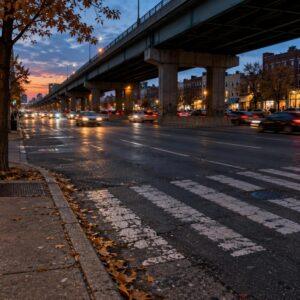
Third Avenue is about 150 feet wide in places, with six moving lanes, two parking lanes and a wide median under an elevated highway. Wide multi-lane roads encourage higher speeds and long crossings, and pillars and shadows under elevated structures can limit visibility for drivers and people on foot. Truck traffic is also a concern on the corridor; a former Community Board 7 chair told amNY the plan may not fully address it.
The city tracks traffic deaths and injuries through its Vision Zero program, and the data consistently show that pedestrians and cyclists make up a large share of people killed on New York City streets. Speed, failure to yield, and drivers who leave the scene are recurring factors in these crashes.
Your Legal Rights After a Hit-and-Run in NYC
Being struck by a driver who flees is frightening, and many people assume they have no way to recover compensation. That is often not the case. In general, under New York law:
- No-Fault benefits apply to pedestrians. A pedestrian hit by a car is usually entitled to No-Fault (Personal Injury Protection) benefits for medical bills and a portion of lost wages, regardless of who was at fault.
- MVAIC may cover unidentified drivers. When a hit-and-run driver cannot be identified, the Motor Vehicle Accident Indemnification Corporation (MVAIC) may provide benefits to eligible injured people who don’t have their own auto insurance. MVAIC has strict notice requirements, including reporting the crash to police promptly and filing a notice of intention to make a claim, generally within 90 days.
- Uninsured motorist coverage may apply. If you or a household member own an auto policy, its uninsured motorist coverage may protect you even though you were on foot.
- Serious injuries can support a lawsuit. If the driver is identified, you may be able to sue for pain and suffering when your injuries meet New York’s “serious injury” threshold.
- Deadlines matter. Most personal injury claims in New York must be filed within three years, wrongful death claims generally within two years of death, and claims against the City of New York usually require a Notice of Claim within 90 days.
Families who have lost a loved one may have a wrongful death claim. An NYC wrongful death lawyer can explain who may bring the claim and what damages may be available. For another recent Brooklyn example, see our post on the Crown Heights bicycle hit-and-run on Nostrand Avenue.
What To Do After a Pedestrian or Bicycle Accident in Brooklyn
- Get medical care right away, even if you feel fine. Some injuries appear hours or days later.
- Call 911 and make a police report. In a hit-and-run, a prompt report is also important for MVAIC and insurance claims.
- Note anything you can about the vehicle — color, make, partial plate, direction of travel.
- Look for witnesses and cameras. Nearby businesses, buses and homes may have video, but footage is often overwritten quickly.
- Photograph the scene and your injuries.
- Avoid giving recorded statements to insurers before speaking with a lawyer.
- Talk to a Brooklyn pedestrian accident lawyer early, so deadlines are met and evidence is preserved.
How Chaikin Trial Group Can Help
Chaikin Trial Group represents people hurt on New York streets, including pedestrian accident and bicycle accident victims and the families of those killed. Our Brooklyn personal injury lawyers can investigate the crash, help track down video and witnesses, handle No-Fault, MVAIC and insurance claims, and pursue every source of recovery available. You can review some of our past results and client reviews, and read answers to common questions on our FAQ page.
Consultations are free, and you pay no fee unless we win. Contact us online to get started.
FAQ
What should I do after a hit-and-run in NYC?
Get medical care, call 911 and file a police report, write down any details about the vehicle, and look for witnesses or cameras. Then speak with a hit and run accident lawyer in NYC about No-Fault, MVAIC and uninsured motorist options, since some notice deadlines are short.
What is MVAIC and can it help me?
MVAIC is a New York organization that may provide benefits to eligible people injured by uninsured or unidentified (hit-and-run) drivers when they have no other applicable insurance. Strict deadlines apply, so it is important to act quickly.
Do I need a Brooklyn bicycle accident lawyer if I was hit while riding?
Cyclists struck by cars have many of the same rights as pedestrians, including possible No-Fault benefits and claims against a negligent driver. A Brooklyn bicycle accident lawyer can help identify all available coverage.
How long do I have to file a pedestrian accident claim in New York?
Most personal injury lawsuits must be filed within three years, wrongful death claims generally within two years, and claims against the City usually require a Notice of Claim within 90 days. No-Fault and MVAIC have even shorter notice periods.
Conclusion
The Third Avenue redesign is a welcome step, but it comes too late for Jiayi Zheng and others killed on this corridor. If you or a loved one was hurt by a driver in Sunset Park or anywhere in the borough, a Brooklyn pedestrian accident lawyer at Chaikin Trial Group can help you understand your options. Contact us online for a free consultation.
This post is for general informational purposes only and is not legal advice. Prior results do not guarantee a similar outcome. Attorney Advertising.